Account preparation
BuranCasino account and KYC: registration, verification and required information
 Available in AU
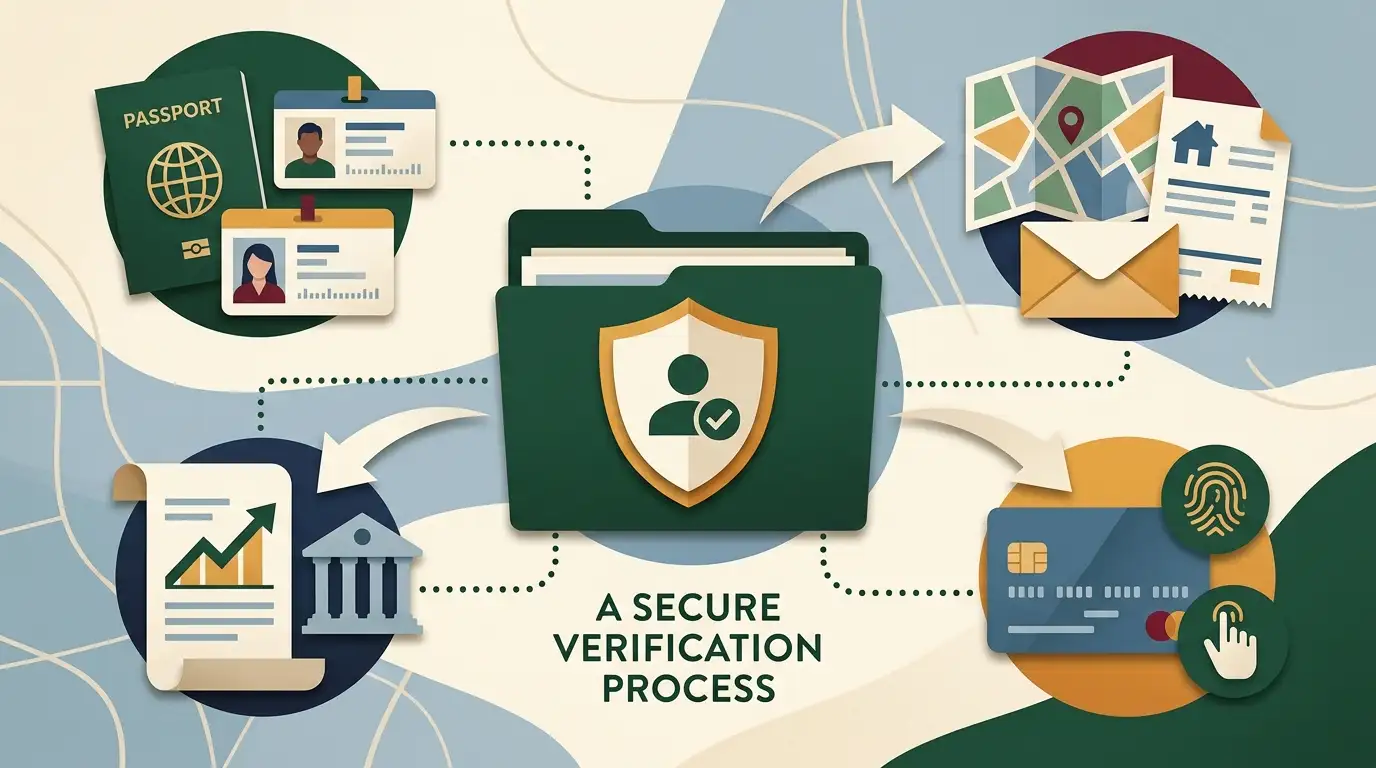
BuranCasino requires a personal account with true, complete and current registration information. Its current terms allow document checks before or after deposits and withdrawals. Examples include certified ID, proof of residence, proof that a payment method belongs to the user and transaction histories. The privacy notice also describes registration, identity, address, source-of-funds and financial data used for KYC and AML purposes.
The safest approach is to prepare accurate documents before a cashout is urgent. Do not create duplicate accounts, use another person’s payment method or send sensitive files through an unofficial channel. For the Australian product and regulatory verdict, start with the BuranCasino Australia Review.
- Registration information should match from the start
- What information can be requested
- Registration data in the privacy notice
- KYC can happen at different stages
- Current document and assessment timing
- How to prepare clear documents
- Payment ownership is central
- Source-of-funds checks
- Privacy and secure submission
- Common account mistakes
- Verification before withdrawal
- KYC and product access are separate
- Frequently asked questions
- Document quality checks before upload
- Resolve profile mismatches before they become urgent
- Account security during KYC
- A KYC request log
- Three verification scenarios
- Data-sharing context
- Final account-readiness test
Registration information should match from the start
The current terms say an account must be registered in the user’s own correct name and that supplied information must be true and complete. Account details should be kept current. These points matter because later documents and payment records are compared with the profile.
Use one personal account. The terms restrict duplicate accounts across a person, household or address, contact details and IP context. Do not create another account to solve a login, bonus or verification problem; contact support about the existing one.
Players must be at least 18 and meet any higher local legal-age rule. Age eligibility is only one account requirement and does not replace identity, payment-ownership or other verification checks.
What information can be requested
| Verification area | Examples in current official material | Preparation principle |
|---|---|---|
| Identity | Certified ID, passport, driving licence or identity-card data | Use a current, clear document belonging to the account holder. |
| Residence | Proof of residence or address | Ensure the name and address match the profile. |
| Payment ownership | Card, wallet or bank ownership documents | Use methods in the registered holder’s name. |
| Transaction history | Bank or payment statements and histories | Provide only the scope securely requested. |
| Source of funds | Financial and source-of-funds information | Answer the specific due-diligence request accurately. |
The list is illustrative, not exhaustive. The terms allow additional security procedures, calls, face verification and third-party verification services.
Registration data in the privacy notice
BuranCasino’s privacy notice describes account data such as email address, date of birth, country, phone number, full name, postcode and username, alongside automatically received IP and location data. Not every field will necessarily appear in the same form or account flow.
The notice also describes due-diligence and financial information, including identity-document details, proof of address, source of wealth or funds, banking identifiers and payment-system information. These categories explain why a verification request can go beyond a single photo ID.
KYC can happen at different stages
The terms allow checks before and after deposits and before or during withdrawal. A successful deposit does not mean the account is fully cleared for all account checks. Likewise, completing KYC does not complete bonus wagering or guarantee that a requested payment route is available.
Prepare early, but upload only after a request shown through the secure account process. Unsolicited document sharing creates unnecessary privacy exposure.
Current document and assessment timing
The official terms give the customer 30 days after a request to provide the requested documents and information. They say verification is usually completed within 10 days after the request is answered in full, while allowing additional time or checks depending on complexity.
This wording does not promise every account a ten-day result. A response can be incomplete, a document can be unclear or an extra source-of-funds check can be required. Keep the request date and submission confirmation so the sequence remains clear.
How to prepare clear documents
- Read the exact request in the account before collecting files.
- Confirm the document belongs to the registered person and is current.
- Ensure required edges and details are visible without editing the content.
- Match the account name, address and payment ownership wherever applicable.
- Use the secure upload process specified by BuranCasino.
- Record the submission date and confirmation.
- Do not send passwords, one-time codes or full card security data.
- Respond only to additional requests shown in the account or official channel.
Payment ownership is central
The terms require payment methods used to fund the account to belong to the user. This connects registration, deposits and withdrawals. A third-party card or wallet can create an ownership mismatch even when the initial transaction technically succeeds.
Before funding, check the full route in BuranCasino Payments in Australia. Before cashout, check BuranCasino Withdrawals in AUD for the current limits and verification relationship.
Source-of-funds checks
Source-of-funds check is not the same as proving identity. It asks how money used in the account was obtained and can involve financial statements or transaction history. Provide accurate documents that answer the specific request rather than sending unrelated financial records.
The privacy notice states that due-diligence and financial information can be used for KYC and AML purposes and shared with payment providers where needed for their obligations. This makes secure handling and data minimisation important.
Privacy and secure submission
Identity and financial documents are sensitive. Verify the domain and account session before uploading. Do not place unredacted documents in public complaints, public comments or casual messages.
Keep a private log containing the request category, submission date and response status, but not passwords or full payment credentials. If support asks for a new channel, confirm it through the official account before using it.
Common account mistakes
- Using a nickname or different spelling from identity documents.
- Leaving an old address or phone number on the profile.
- Opening a duplicate account when access or bonus activation fails.
- Funding with a method belonging to another person.
- Assuming a deposit means KYC is finished.
- Waiting until withdrawal to locate documents.
- Sending more sensitive information than the secure request requires.
- Confusing bonus completion with account verification.
Verification before withdrawal
A cashout request can trigger identity, residence, payment-ownership or source-of-funds checks. The practical goal is consistency: one account, accurate data, owned payment routes and a clear transaction record.
The detailed BuranCasino Verification Before Withdrawal guide focuses on document categories and responding to a request without exposing unrelated data.
KYC and product access are separate
Passing account checks confirms only that the submitted details meet the operator’s current verification process. It does not guarantee access to every game, promotion or payment route. Check those product conditions separately and keep the account documents current. For the separate Australian regulatory position, see BuranCasino Licence and Australia.
Frequently asked questions
What can BuranCasino request for KYC?
Current official material lists identity, residence, payment-ownership, transaction-history and source-of-funds information among possible checks.
When can verification happen?
The terms allow checks before or after deposits and before or during withdrawals.
How long do I have to respond?
The current terms give 30 days after the request to provide documents and information.
Is verification always completed in ten days?
The terms say it is usually completed within ten days after a full response, but complex cases can require more time or checks.
Document quality checks before upload
| Check | Pass condition | Common problem |
|---|---|---|
| Identity | Current document, clear details and required edges visible | Blur, glare, crop or expired document |
| Address | Name and address correspond to the account | Old address or incomplete page |
| Payment ownership | Holder and relevant method details are visible | Third-party instrument or excessive redaction |
| Transaction history | Requested period and relevant entries can be understood | Unrelated pages or missing dates |
| Source of funds | The documents address the stated source-of-funds question | Sending unrelated financial records |
Do not edit the substantive content of a document. Follow the secure request for permitted masking of sensitive numbers, and never reveal a security code or password.
Resolve profile mismatches before they become urgent
A change of address, phone number or name can create a difference between the profile and current documents. Use the official account process to update details and keep any supporting change record. Do not create a new account to obtain a cleaner profile.
If a payment method uses a shortened or differently formatted name, ask what documents are required rather than assuming the mismatch is harmless. The goal is a consistent chain from the person to the account and payment route.
When an error was entered during registration, explain it accurately. Inventing a story or altering a document creates a larger verification problem than the original mistake.
Account security during KYC
Keep the login and password private and use a unique password. A document request does not require giving support access credentials or a one-time authentication code. Treat unsolicited messages that create urgency or move the upload outside the official process as a reason to verify the request.
Check the website address before signing in or uploading. Log out on shared devices and do not leave downloaded identity files in public folders. Delete unnecessary temporary copies after confirming the secure submission, while retaining the original documents privately.
A KYC request log
- Date and exact request category.
- Official account channel where the request appeared.
- Documents requested, without copying sensitive values into the log.
- Submission date and confirmation reference.
- Any follow-up question and secure response.
- Status date and outcome.
- Payment request connected to the account, if relevant.
The log makes the 30-day response period and usual post-completion assessment window easier to track. It also helps distinguish a new request from a repeated message about an existing one.
Three verification scenarios
Routine identity and address check
Use current documents matching the profile, check image quality and submit through the account. Wait for a status update rather than uploading several versions without a request.
Payment ownership check
Show that the card, wallet or bank account belongs to the registered user while protecting irrelevant credentials. If the method belongs to another person, do not misrepresent ownership.
Source-of-funds check
Read the period and source named in the request. Provide documents that explain that source and the relevant transaction trail. Ask for clarification if the requested scope is unclear before sending broad financial history.
Data-sharing context
The privacy notice says account data and KYC documents can be shared with payment providers and other service providers where needed for payment, verification, fraud prevention and legal obligations. It also describes collection from public and commercial sources for verification and risk controls.
This is another reason to limit data to what the secure account request requires. Accurate documents are necessary, but unrelated personal information should not be included merely because a document file contains it.
Final account-readiness test
The account is prepared when registration data is accurate, one personal account is used, payment methods belong to the account holder, current identity and address documents can be produced, and secure submission channels are understood. Verification can still request more information, but these steps remove preventable inconsistencies.
Passing KYC does not make gambling affordable or locally approved. Keep account readiness separate from the decision whether to use the service at all.
Check profile accuracy again whenever personal or payment details change.
Written by the editors at Buran Casino.